The Study Corner
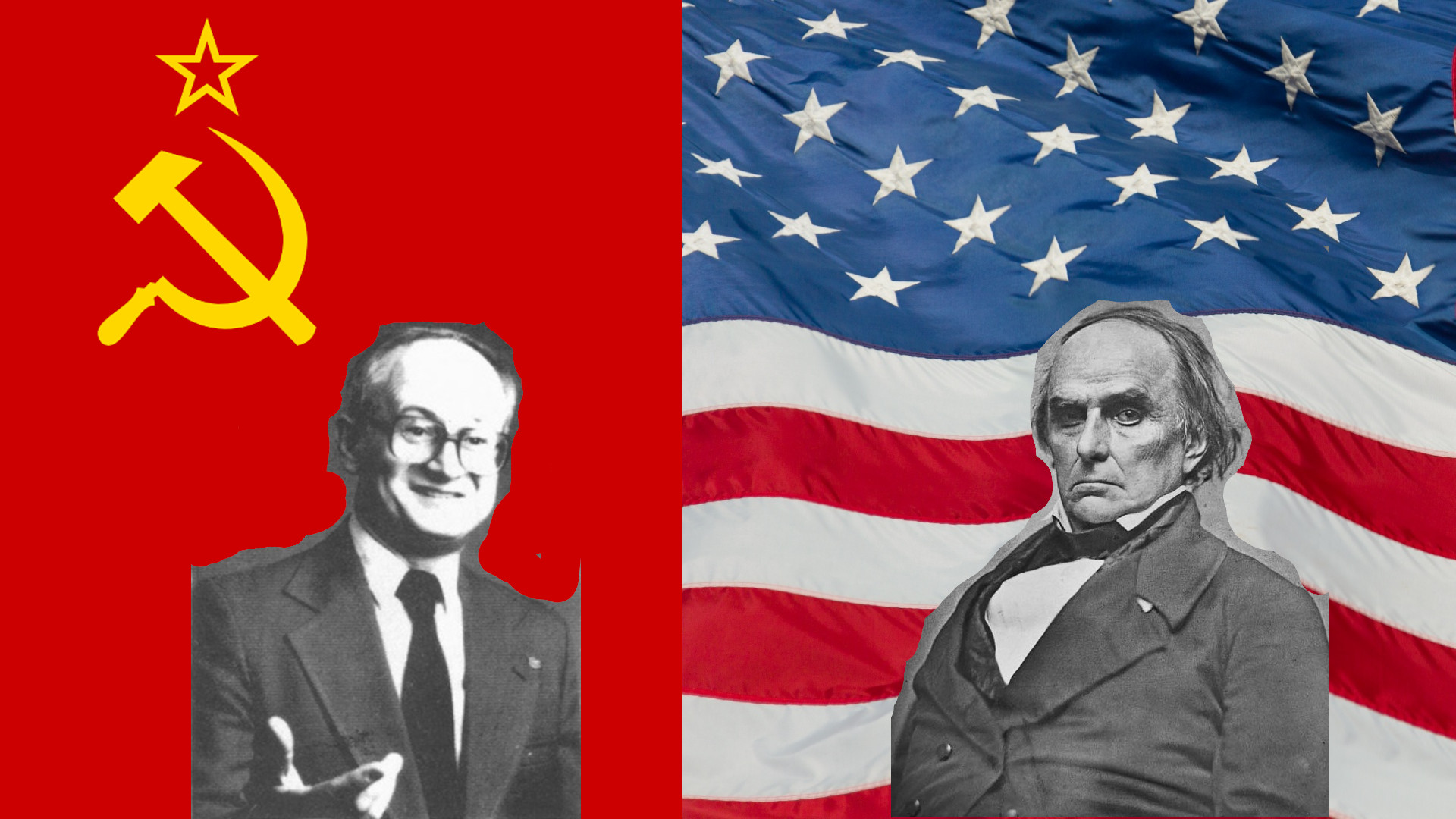
398 – Will America be Destroyed From the Inside?
In 1837, Daniel Webster wrote:
“I apprehend no danger to our country from a foreign foe… Our destruction, should it come at all, will be from another quarter. From the inattention of the people to the concerns of their government, from their carelessness and negligence, I must confess that I do apprehend some danger.”
I’ve been thinking about that statement lately. I came across a video that I had forgotten about. It’s part of an interview with Soviet defector Yuri Bezmanov. Mr Bezmanov was a former KGB agent who defected to Canada in 1970. Then, in 1984, he gave an interview to G Edward Griffin where he exposed a long-term Soviet plan to defeat America not by force of arms, but through psychological warfare.
You may be asking, what does a late 20th century defector have to do with a 19th century lawyer and statesman, and how could it possibly be relevant to our situation in the 2020s? Come to find out, both of these men were quite prescient in their warnings to the American people.
yuri bezmanov, bezmanov, daniel webster, webster, freedom, foe, foreign, foreign influence, warfare, psychological warfare, decline, fall, russia, soviet union,
Read More

397 – Truth Under Attack
There have always been attacks on what is true. From the serpent in the Garden of Eden asking “Did God really say…” to today’s attempts to quash “disinformation”, truth has been under attack. While many of these attacks have been about what the truth is, over the past couple of generations, the idea of truth itself has been under attack. Why is that so? In the Gospel of John, Jesus said:
And you shall know the truth, and the truth shall make you free.”
John 8:32 (NKJV)
Could the answer be that simple? Could the attacks on the very idea of truth simply be attacks on our freedom? If that is true, then what can we do to defend not only our freedom, but the very idea of freedom itself?
Read More
396 – Hard Cases Make Bad Precedent
There is an adage in the legal profession, “Hard cases make bad law.” Well, since cases in this country to not truly make law only precedent, you might be tempted to dismiss this saying. However, since our courts are so devoted to their precedent, we should be very careful when hard cases come to the Supreme Court. For example, one case heard by the court has a very unsavory respondent. The question is, will Mr. Zackey Rahimi’s shady past be used to infringe on the right of the rest of Americans?
Read More
395 – Social Media and Government Communications
Social media has become so much of everyday lives that we often don’t think about its use. This has led to what appears to be a large percentage of Americans developing what can at best be described as “interesting ideas” about the relationship between government and the various social media platforms. Some recent cases heard before the Supreme Court bring the question of the relationship between government actors and social media companies into question. Probably the best well known would be Missouri v. Biden, where the states of Missouri and Louisiana have brought suit claiming that members of the Biden Administration violated the First Amendment by attempting to influence what content would be deleted or deemphasized on various platforms. However, two other cases involving local officials focus on under what circumstances government actors can block access to their social media accounts. While most of the country seems to be focused on Missouri, these two cases bring up some questions the American people should really think about.
Read More
394 – Placing Politics Above Children?
Studies show that the best outcomes for children is to live in a home with their married parents. If the world were perfect, then all children would have that chance. But the world isn’t perfect, and either by accident or as the consequences of the actions of adults, children will be in need of people to step in for their parents. In our modern society, the role of finding homes for these children has been filled by the state government. What happens when those government entities place politics above the needs of their charges? A recent case in the U.S. District Court for Massachusetts deals with that very topic. Plaintiffs Michael and Catherine Burke claim that the State of Massachusetts Department of Children and Families (DCF) discriminated against them in their application to become foster parents for religious reasons. When I looked at the case what I saw wasn’t so much religious discrimination, but DCF placing political viewpoints above not only the Constitution of Massachusetts, but what is best for the children in their care.
Read More
393 – Public Recording
Do you have a right to record people in public? A recent case out of Oregon asked that very question, can states restrict who and when people can record the conversations in public. Oregon law prohibiting recording public conversation except in certain limited circumstances was challenged by Project Veritas. As is so often the case, both the legal challenges and judicial opinion make some questionable constitutional claims. This is why we’re going to look at the opinion of the Ninth Circuit Court Panel and decide for ourselves, does recording the public conversations of others violate the law or does the law violate the Constitution?
Read More
392 – Your Right to Remain Silent
You have the right to remain silent. Anything you say can and will be used against you in a court of law…
Miranda Warning
If you’ve ever been taken into custody, or simply watched a crime procedural on TV, you’re familiar with the Miranda warning, named after the 1966 Supreme Court case Miranda v. Arizona. However, if you’re getting your legal advice from television, you may find yourself in serious legal trouble. Where does this right to remain silent come from, how is it protected, and just how constitutional is the Miranda decision?
Read More
390 – Civil Asset Forfeiture, Policing for Profit
The more things change, the more they stay the same. Several years ago I wrote an article about the Battle of Athens, TN. In the article I showed the corruption in McMinn County Sheriff’s Department, where the Sheriff and his deputies did not receive a salary, but were paid for everyone they booked, incarcerated, and released. This perverse incentive let to deputies routinely boarding buses to “fine” and jail the passengers for any alleged violations they could come up with. When subject to this corruption, many GIs returning from World War II were led to challenge the corrupt county Sheriff and other office holders. This challenge led not only to an embattled election, but an armed uprising in an attempt to restore the rule of law.
Read More