Year: 2026

Climate Models, Resource Failures, And Administrative Hubris
Photo Credit:
Author
By David DeMay
Neither prediction nor authority can substitute for demonstrated understanding.


Trump Announces Federal Support to Keep Local Energy Provider Online in Ohio
The president announced the directive at his second Ohio rally on a midterm campaign tour backing Republican candidates.
Read More
Ilhan Omar Responds to Federal Raid on DC Home, Says She Will Not Be ‘Silenced’
Rep. Ilhan Omar, D-Minn., said on Monday that she "will not be silenced" by the federal raid on her Washington, D.C., home, arguing that the Trump administration has weaponized federal law enforcement against its political enemies.
"I’m ok. Make no mistake: this is an attempt to target political enemies and weaponize federal law enforcement. For ten years, Trump has targeted me with baseless lies and smear campaigns. This is just the latest escalation in his campaign of political intimidation," Omar said in a post to X.

California’s energy crisis could bring the West Coast to its knees
The resulting loss of jet fuel would cause thousands of flight cancellations, likely resulting in multiple airport closures. At this point, California’s 30 military bases would not have the jet fuel that they need to maintain operations. The resulting loss of diesel fuel could lead to dire consequences. Cities only have 3 to 5 days of food supply…
Read More
New California Law Requires Churches to Implement Pro-LGBT ‘Anti-Hate Speech’ Training
THE WASHINGTON STAND—A newly enacted law in California that requires virtually all employers to give employees “anti-hate speech” training is raising red flags, as experts say that the mandate could force churches to provide training that conflicts with sincerely held biblical beliefs regarding sexuality, gender, and marriage. Late last month, California Gov. Gavin Newsom, a…
Read More
544 – Spirit of 1776 or 1984
In 1776, Thomas Jefferson wrote some of the most famous words in the Declaration of Independence. In 1949, George Orwell wrote the novel 1984, warning of a dystopian future. The question I have is, will the future of the United States of America be the Spirit of 1776 or the Spirit of 1984?
Read More
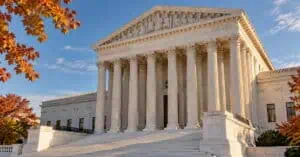
The Supreme Court returns to a constitutional minefield
The Constitution Study with Host Paul Engel – The Supreme Court’s new term raises questions about constitutional limits, government accountability, and women’s sports. Allegations of political surveillance and disputes over congressional power sharpen the debate. Can judges uphold the Constitution when citizens lack the knowledge needed to recognize violations and demand meaningful accountability…
Read More
Arizonans to Vote on Ending Taxpayer-Funded DEI Programs
THE CENTER SQUARE—Arizonans will have a chance to put a stop to their taxpayer money being spent on diversity, equity and inclusion programs. On Nov. 3, Arizona residents will vote on Proposition 142, which would stop state money from funding DEI-related offices and programs. The proposition would prevent taxpayers from being forced to support race-based…
Read More